
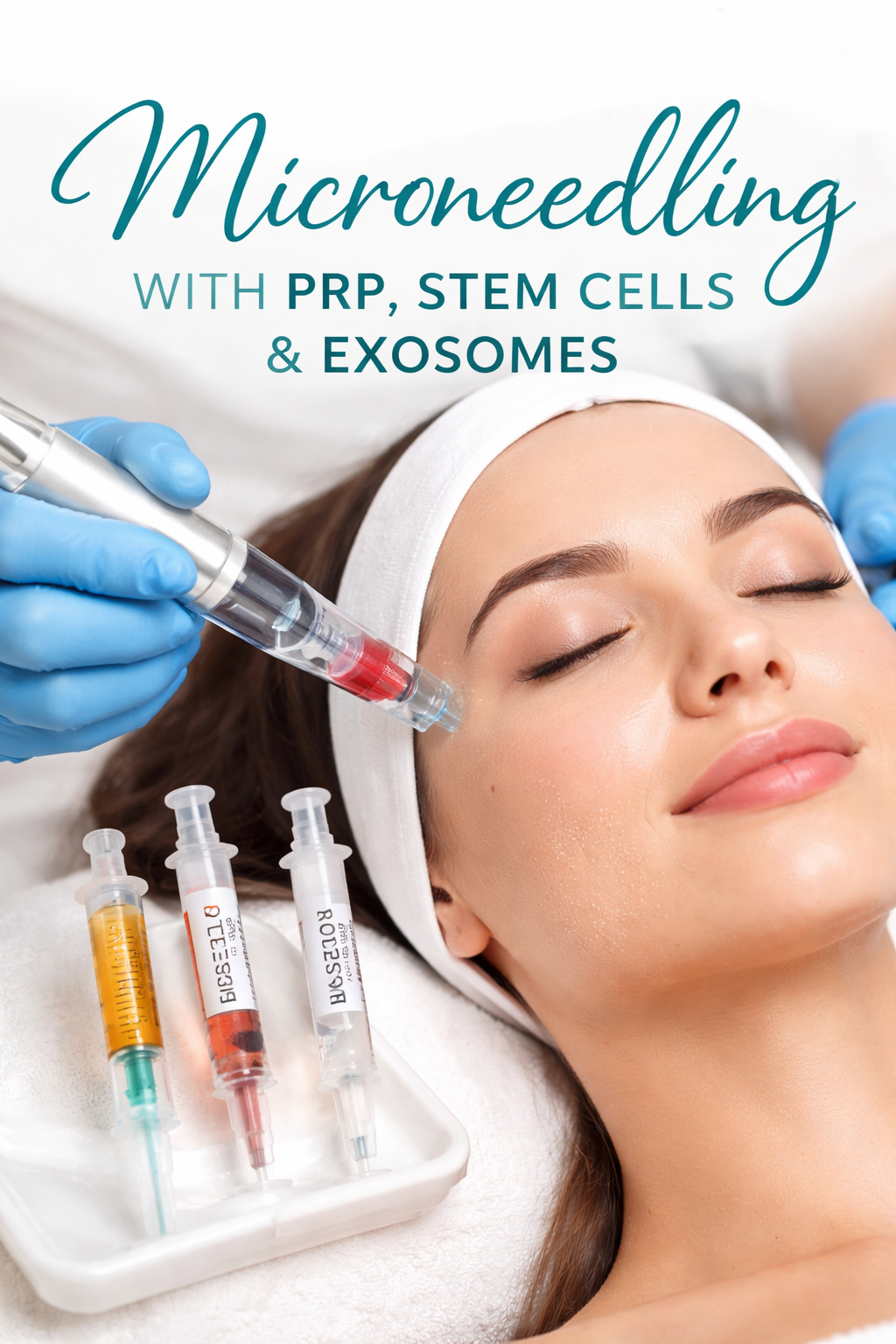
If you’re looking for a way to refresh your skin and support a youthful glow, microneedling for skin rejuventation may be an option worth exploring. This minimally invasive treatment works by creating tiny channels in the skin, stimulating the body’s natural healing processes. By combining microneedling with advanced therapies like PRP, stem cells, or exosomes, you can enhance results and target specific skin concerns.
What Is Microneedling?
Microneedling, sometimes called collagen induction therapy, uses fine needles to create micro-injuries in the skin. These controlled injuries prompt the skin to produce new collagen and elastin, which can improve texture, firmness, and overall radiance.
Clinics often pair microneedling for skin rejuvination with regenerative treatments:
- PRP (Platelet-Rich Plasma): Uses growth factors from your blood to support healing.
- Stem Cells: Helps support tissue regeneration and overall skin health.
- Exosomes: Cell-derived signaling molecules that may enhance the skin’s natural repair mechanisms.
By selecting the right combination for your goals, providers can tailor treatments for fine lines, acne scars, sun damage, or overall skin rejuvenation.
How Microneedling Works
Microneedling stimulates your skin’s natural repair process:
- Creates micro-injuries: Tiny needles gently puncture the skin to trigger healing.
- Boosts collagen and elastin: The body responds by producing new collagen and elastin for firmer, healthier skin.
- Enhances regenerative treatments: When combined with PRP, stem cells, or exosomes, these therapies penetrate deeper and target specific areas of concern.
- Supports skin rejuvenation: Over time, this process can help improve texture, tone, and overall appearance.
Microneedling vs. Botox, Fillers, and Lasers
Many people wonder how microneedling compares to other popular skin treatments.
- Botox: Temporarily relaxes muscles to reduce the appearance of dynamic wrinkles. Microneedling, on the other hand, focuses on skin texture, scars, and collagen production rather than muscle activity.
- Fillers: Add volume to targeted areas, such as cheeks or lips. Microneedling does not add volume but can improve skin quality and firmness.
- Laser Treatments: Use heat energy to resurface or stimulate skin. Lasers can provide dramatic results, but microneedling is often gentler, has shorter downtime, and can be combined with regenerative products to support natural healing.
Ultimately, microneedling is a versatile option that complements other treatments rather than replacing them, and it can be tailored to address multiple concerns at once.
Downtime and Recovery
Microneedling is minimally invasive, but some temporary effects are normal:
- Redness and mild swelling for 1–3 days
- Light peeling or flaking as the skin heals
- Makeup can typically be worn after 24–48 hours
- Sun protection is critical during the healing period
Because recovery is short, microneedling is a convenient option for people with busy lifestyles seeking gradual, natural-looking improvements.
Why Combine Microneedling with PRP, Stem Cells, or Exosomes?
By adding regenerative treatments, microneedling can:
- Enhance healing and skin repair
- Target specific skin concerns more effectively
- Support collagen and elastin production at a deeper level
Providers select the combination that aligns with your goals, whether you’re addressing fine lines, acne scars, sun damage, or overall rejuvenation.
Is Microneedling Right for You?
Microneedling is suitable for most adults looking to improve skin texture and appearance. A consultation with a trained provider helps determine which approach—PRP, stem cells, or exosomes—fits your unique goals.
Whether you want smoother skin, improved tone, or enhanced radiance, microneedling offers a customizable, non-surgical option to support your skin’s natural health.
Learn More About Your Skin Options
If you’re interested in exploring microneedling with PRP, stem cells, or exosomes, schedule a consultation with our team today. We can review your skin concerns, explain the available treatment options, and help you determine which approach may be appropriate for your goals.
Written By: Ritu Patel, FNP-BC
Expert in Regenerative & Restorative Medicine